
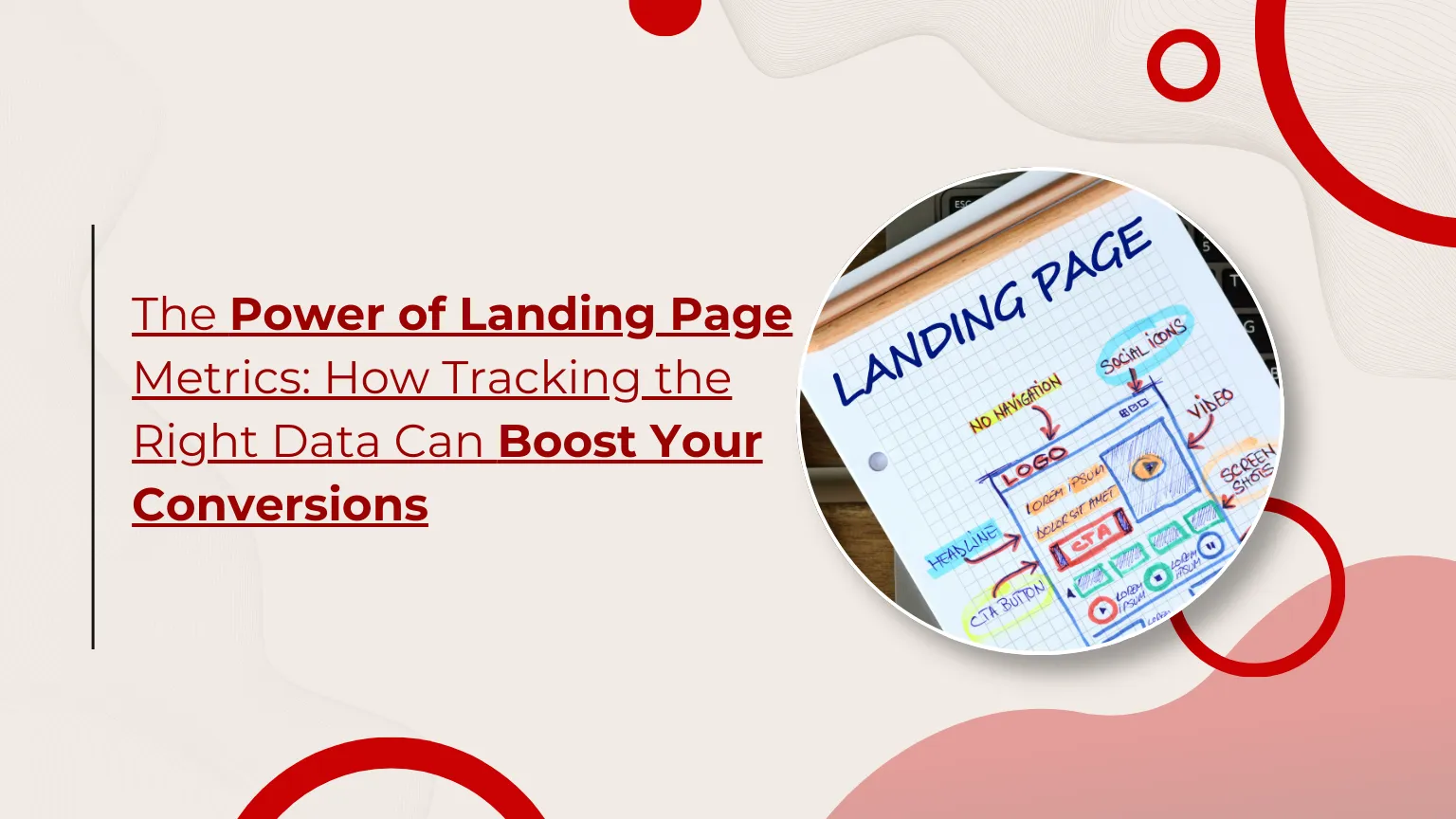
A landing page is often your first impression—it’s where curious visitors decide whether they’ll stay and take action or bounce away. That’s why optimizing your landing page isn’t just about sleek design—it’s about performance. To know whether your page is doing its job, you need to track the right metrics.
In this blog, we’ll walk you through the 8 most important landing page metrics that help you measure success, uncover areas for improvement, and increase conversions.
1. Conversion Rate
This is the ultimate metric for any landing page. It measures the percentage of visitors who complete your desired action—whether that’s signing up for a newsletter, downloading an eBook, or making a purchase.
Formula: (Number of Conversions / Total Visitors) x 100
A high conversion rate means your landing page is doing its job. If it’s low, you may need to tweak your messaging, visuals, or CTA.
Tips to Improve:
- Use clear, compelling CTAs
- Match the page content to your ads
- Simplify the form or conversion process
2. Bounce Rate
Bounce rate shows the percentage of visitors who land on your page and leave without interacting further.
High bounce rates may suggest your landing page isn’t relevant to your ad, or it lacks compelling content or usability.
Tips to Improve:
- Make sure the content matches the ad
- Optimize loading speed
- Improve layout and readability
3. Average Time on Page
This metric tells you how long visitors are spending on your landing page. More time generally indicates that people are engaging with your content.
However, if the time is high and conversions are low, it may mean your message is unclear or your CTA isn’t convincing.
Tips to Improve:
- Break content into digestible sections
- Use engaging visuals and videos
- Make the CTA visible without scrolling
4. Page Load Time
Page speed is critical. A delay of even a few seconds can increase bounce rates and hurt conversions.
Use tools like Google PageSpeed Insights to monitor and improve load times.
Tips to Improve:
- Compress images
- Minimize scripts
- Use fast, reliable hosting
5. Form Abandonment Rate
If your landing page includes a form, track how many users start filling it out but don’t complete it. A high form abandonment rate indicates friction in the conversion process.
Tips to Improve:
- Reduce the number of fields
- Add autofill options
- Clearly explain why you’re asking for certain info
6. Traffic Sources
Knowing where your visitors are coming from—whether it’s social media, Google Ads, organic search, or email—can help you understand what’s driving traffic and where to invest more.
Tips to Improve:
- Double down on high-performing sources
- Adjust messaging based on traffic intent
- Use UTM parameters to track campaigns
7. Scroll Depth
Scroll depth shows how far down the page users go. It’s an important engagement metric that helps you see whether users are reading your content or bouncing early.
Tips to Improve:
- Place the most important content and CTA higher up
- Use visual cues to encourage scrolling
- Break up long sections with engaging elements
8. Mobile vs Desktop Performance
With more users browsing on mobile, it’s critical to compare how your landing page performs across devices. A poor mobile experience can cost you conversions.
Tips to Improve:
- Use responsive design
- Simplify navigation for smaller screens
- Test and optimize CTAs for touch interactions
Final Thoughts
Landing pages are where conversions happen—or don’t. Tracking the right metrics helps you move beyond guesswork and design decisions based on data. Focus on improving conversion rate, reducing bounce, and ensuring a seamless experience across all devices.
At Devoir Designs, we specialize in building and optimizing high-converting landing pages. Whether you want to drive signups, sales, or leads, we make sure every click counts. Let’s turn your traffic into results!
